


Inside Lagos' Industrial Property Boom: Why Warehouses Are in High Demand
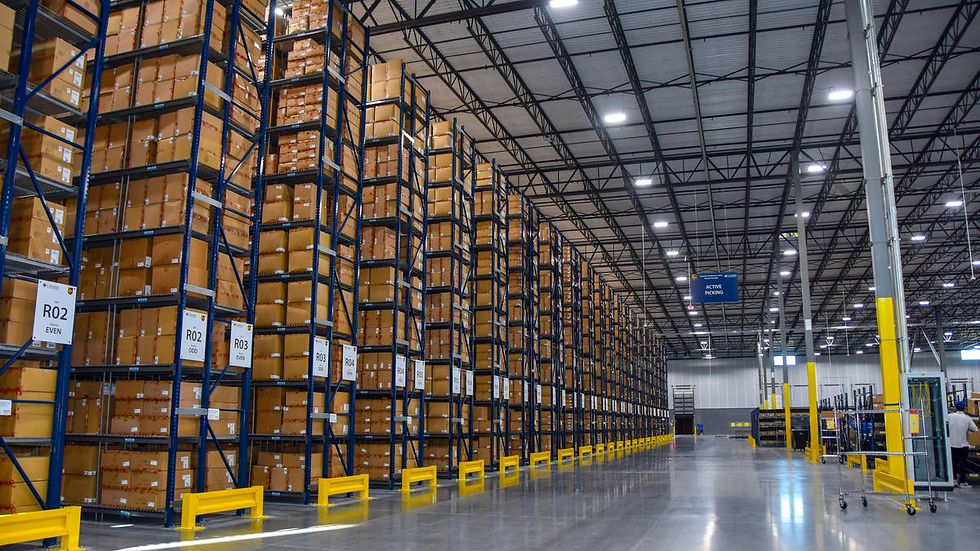
For decades, Lagos' real estate market has been defined by residential estates, luxury apartments, and high-rise office buildings. While these segments continue to attract attention, another corner of the property market has quietly become one of the city's strongest performers. Warehouses and industrial properties, once considered purely functional spaces, are now among the most sought-after real estate assets in Lagos. As trade expands, manufacturing grows, and businesses race to deliver goods faster, industrial property is becoming a critical part of the city's economic engine.
The shift is being driven by more than just population growth. Businesses today operate in an environment where speed, efficiency, and supply chain reliability determine success. Every product sold online, every imported container, and every manufactured item requires a place to be stored before reaching consumers. This growing need has transformed warehouses from simple storage facilities into strategic business assets. Companies are now competing for well-located industrial spaces that allow them to reduce delivery times, manage inventory more effectively, and keep operations running smoothly.

Lagos remains the commercial heartbeat of Nigeria, making it the natural centre for industrial activity. Goods entering the country through the ports in Apapa and Tin Can Island pass through warehouses before being distributed across the nation. Manufacturers depend on industrial facilities to store raw materials and finished products, while wholesalers and distributors require large storage spaces to serve retailers across different states. This constant movement of goods has created sustained demand for warehouses in established industrial districts such as Ikeja, Amuwo-Odofin, Iganmu, and Apapa, while newer corridors like the Lekki-Epe axis and Agbara continue to attract developers and investors.
The rise of e-commerce has added another layer to this demand. Online retailers cannot promise next-day or same-day delivery without strategically located warehouses that allow products to be dispatched quickly. As more Nigerians embrace online shopping, businesses are expanding their logistics networks to stay competitive. What was once enough for a traditional retail business is no longer sufficient in a market where customers expect faster deliveries and better service.
This has encouraged companies to lease larger warehouses equipped with modern loading bays, improved security systems, and better inventory management facilities.
Infrastructure development is also reshaping the industrial property market.
The Lekki Deep Sea Port, the Dangote Refinery, and the continued expansion of the Lekki Free Zone have transformed the eastern corridor of Lagos into one of Nigeria's most promising industrial zones. These projects are attracting manufacturers, logistics firms, and international investors who require warehouse facilities close to production centres and transport links. At the same time, improvements to major highways connecting Lagos with Ogun State have encouraged businesses to establish distribution hubs in neighbouring industrial communities where larger parcels of land remain available.
Unlike luxury apartments that can experience fluctuations in demand, industrial properties often attract long-term corporate tenants with stable business operations. Companies that invest heavily in warehouse infrastructure rarely relocate because moving equipment, inventory, and logistics operations can be both expensive and disruptive. This stability has made industrial real estate increasingly attractive to investors seeking predictable rental income and lower vacancy risks. As institutional investors begin to recognise the resilience of the sector, more capital is flowing into warehouse development across Lagos.
The boom, however, is not without its challenges. High construction costs, rising land prices, poor road conditions in some industrial districts, and inconsistent electricity supply continue to increase operating expenses for developers and tenants alike. Flooding in certain parts of Lagos also remains a concern, particularly for businesses storing valuable goods. Despite these obstacles, demand continues to outpace supply in many strategic locations, encouraging developers to build more modern industrial facilities designed to meet the evolving needs of businesses.
The growing importance of industrial property reflects a broader transformation in the Lagos economy. As commerce becomes increasingly technology-driven and supply chains become more sophisticated, warehouses are no longer hidden structures on the outskirts of the city. They have become essential infrastructure supporting manufacturing, trade, retail, and logistics. Every successful business depends on the efficient movement of goods, and that efficiency begins inside a warehouse.
For investors looking beyond the traditional residential and commercial sectors, Lagos' industrial property market offers one of the most compelling opportunities in today's real estate landscape. As the city continues to grow into a regional business hub, warehouses will remain at the centre of economic activity, proving that in modern commerce, the most valuable buildings are often the ones the public rarely notices.


Comments